In a world of skyrocketing smartphone prices, Google’s Pixel “a-series” has been a beacon of hope for budget-conscious users who refuse to compromise on quality. The Pixel 3a, 6a, and 7a have consistently been crowned as the best mid-range phones, offering a taste of Google’s premium software and class-leading camera in an affordable package.
Now, all eyes are on the horizon for its successor: the Google Pixel 9a. While Google has yet to announce it officially (it’s expected in mid-2025), the rumor mill is churning, and based on Google’s established patterns, we can paint a remarkably detailed picture of what to expect. This isn’t just another incremental update; the Pixel 9a is poised to redefine the value proposition once again.
Design & Display: Maturing the A-Series Aesthetic
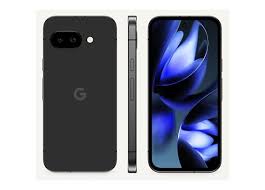
The biggest visual change for the Pixel 9a will likely be its design language, taking cues from the flagship Pixel 9 and Pixel 9 Pro XL.
- A New Silhouette: Forget the curved, pill-shaped camera bar of the past. Expect the Pixel 9a to adopt the new, sleek “Pill-shaped” camera visor that sits flush against the metal frame. This gives the phone a more polished, professional look that aligns it closely with its more expensive siblings.
- Build Quality: Google will probably stick with a composite (high-quality plastic) frame for the 9a to keep costs down, but with a matte or glossy finish that feels premium in the hand. The back will likely remain plastic, which has the advantage of being durable and enabling wireless charging.
- Display: The display is one area where we hope to see a significant jump. The Pixel 8a already got a 120Hz Actua display, so the 9a will almost certainly retain this buttery-smooth refresh rate. We can hope for a slight bump in peak brightness (perhaps 1600 nits or higher) for better outdoor visibility. The size should remain in the comfortable 6.1-inch range, making it a champion for one-handed use.
The Beating Heart: Performance with Tensor G4 and AI Magic
This is where the Pixel 9a will truly separate itself from the mid-range competition.
- Chipset: The Pixel 9a will almost certainly be powered by Google’s Tensor G4 chip, the same silicon found in the Pixel 9 and 9 Pro. This is a monumental leap. While raw benchmark numbers might not always compete with the latest Snapdragons, the Tensor G4’s real power lies in its specialized AI and machine learning cores.
- AI is the Star: The Tensor G4 will unlock the full suite of Google’s groundbreaking AI features for the budget segment. Expect the Pixel 9a to include:
- Circle to Search: The incredibly useful feature that lets you circle anything on your screen for instant Google results.
- Best Take: Magically fix group photos by combining the best expressions from multiple shots.
- Audio Magic Eraser: Clean up distracting background noises from your videos with a simple slider in Google Photos.
- Gemini Nano: With on-device AI, the Pixel 9a will offer smarter, more contextual features directly on your phone without needing an internet connection.
This AI-first approach means the Pixel 9a won’t just feel fast; it will feel smart, anticipating your needs and enhancing your daily tasks in ways other phones in this price range simply cannot.
The Crown Jewel: Camera System That Defies Its Price
The camera has always been the Pixel a-series’ killer feature, and the 9a will be no different.
- Main Sensor: We expect Google to carry forward the excellent 64MP main sensor from the 7a and 8a, paired with the magical Google Camera software. Thanks to the more powerful Tensor G4, computational photography will be even faster and more effective. This means stunning Night Sight photos, incredible HDR+ processing, and professional-looking portraits with beautiful bokeh.
- Ultra-Wide Camera: A 13MP ultra-wide sensor will likely be retained, perfect for capturing landscapes, architecture, and group shots.
- Video Capabilities: Expect 4K 60fps video recording across both lenses, with features like Video Boost and Night Sight Video potentially trickling down from the flagship models, making your videos look professionally graded even in challenging lighting.
In essence, the Pixel 9a is projected to offer a camera experience that rivals phones costing twice as much. For photography enthusiasts on a budget, this will be the phone to beat.

Software & Longevity: A Promise Few Can Match
One of the most compelling reasons to buy a Pixel is its software promise, and the Pixel 9a will be the king of this domain.
- Android 15 and Beyond: It will launch with Android 15 out of the box.
- Seven Years of Updates: Following the precedent set by the Pixel 8 series, the Pixel 9a is almost guaranteed to receive an unprecedented seven years of OS updates, security patches, and Feature Drops. This means your phone will be supported and secure all the way until 2032. No other manufacturer in the mid-range segment comes close to this level of long-term commitment. It’s not just a phone; it’s a long-term investment.
Battery Life, Charging, and Pricing
- Battery: We can expect a battery capacity similar to the Pixel 8a (around 4,500mAh), which should comfortably last a full day for most users. The efficiency of the Tensor G4 chip will play a key role in optimizing battery life.
- Charging: Wired charging will likely remain at 18W, with 7.5W wireless charging support. It’s not the fastest on the market, but it’s a welcome feature at this price.
- Price: This is the critical question. With rising component costs and the inclusion of flagship-level AI chips, there’s a chance we might see a slight price increase. However, Google’s mission with the ‘a-series’ has always been accessibility. We predict it will launch at a starting price of $499 / ₹44,999, positioning it squarely against phones like the Nothing Phone (2a) and the higher-end Samsung Galaxy A-series.
The Competition & Final Verdict
The Pixel 9a will face stiff competition from the Nothing Phone (3) and the Samsung Galaxy A55. However, neither can match the complete package that Google offers: a clean, bloat-free software experience, industry-leading camera computational photography, a suite of exclusive and practical AI tools, and a software support promise that is in a league of its own.
Conclusion: Should You Wait for the Pixel 9a?
If you’re in the market for a new mid-range phone and your current device is still functional, waiting for the Pixel 9a is a no-brainer. It represents the culmination of Google’s vision for the affordable smartphone: a device that doesn’t feel like a compromise. With a flagship-level AI chipset, a class-defining camera, a modern design, and a seven-year software guarantee, the Google Pixel 9a isn’t just poised to be the best mid-range phone of 2025—it’s poised to be one of the smartest purchases you can make, period.Software & Longevity: A Promise Few Can Match
One of the most compelling reasons to buy a Pixel is its software promise, and the Pixel 9a will be the king of this domain.
- Android 15 and Beyond: It will launch with Android 15 out of the box.
- Seven Years of Updates: Following the precedent set by the Pixel 8 series, the Pixel 9a is almost guaranteed to receive an unprecedented seven years of OS updates, security patches, and Feature Drops. This means your phone will be supported and secure all the way until 2032. No other manufacturer in the mid-range segment comes close to this level of long-term commitment. It’s not just a phone; it’s a long-term investment.
Battery Life, Charging, and Pricing
- Battery: We can expect a battery capacity similar to the Pixel 8a (around 4,500mAh), which should comfortably last a full day for most users. The efficiency of the Tensor G4 chip will play a key role in optimizing battery life.
- Charging: Wired charging will likely remain at 18W, with 7.5W wireless charging support. It’s not the fastest on the market, but it’s a welcome feature at this price.
- Price: This is the critical question. With rising component costs and the inclusion of flagship-level AI chips, there’s a chance we might see a slight price increase. However, Google’s mission with the ‘a-series’ has always been accessibility. We predict it will launch at a starting price of $499 / ₹44,999, positioning it squarely against phones like the Nothing Phone (2a) and the higher-end Samsung Galaxy A-series.
The Competition & Final Verdict
The Pixel 9a will face stiff competition from the Nothing Phone (3) and the Samsung Galaxy A55. However, neither can match the complete package that Google offers: a clean, bloat-free software experience, industry-leading camera computational photography, a suite of exclusive and practical AI tools, and a software support promise that is in a league of its own.
Conclusion: Should You Wait for the Pixel 9a?
If you’re in the market for a new mid-range phone and your current device is still functional, waiting for the Pixel 9a is a no-brainer. It represents the culmination of Google’s vision for the affordable smartphone: a device that doesn’t feel like a compromise. With a flagship-level AI chipset, a class-defining camera, a modern design, and a seven-year software guarantee, the Google Pixel 9a isn’t just poised to be the best mid-range phone of 2025—it’s poised to be one of the smartest purchases you can make, period.